

Adur District Council is looking for your input as it prepares to update the Adur Local Plan – an important document that is intended to guide and inform planning decisions across the district.
The process is at an early stage, looking for initial views, but looking at the ‘Key Issues’ Consultation Document, we’re already concerned about some aspects of the initial approach.
What are we concerned about?
a. The ‘Key Issues’ Consultation Document hints at an over-optimistic view of the current situation, saying “Adur has an increasing number of cycle routes and lanes.” In reality, there has been hardly any growth in provision of quality cycle infrastructure within the last decade. Trial schemes have been removed, ambitions have been curtailed and dangerous road layouts repainted. A privately constructed path has partly made good the previous loss of a route over the A27 near the airport, and some progress from West Sussex County Council is expected in Lancing in 2025, but Adur is lagging well behind many of the other areas within WSCC’s highways control.
b. The document says: “However, [designing developments to reduce car reliance] has limited effect on lifestyle choices and behaviours.”
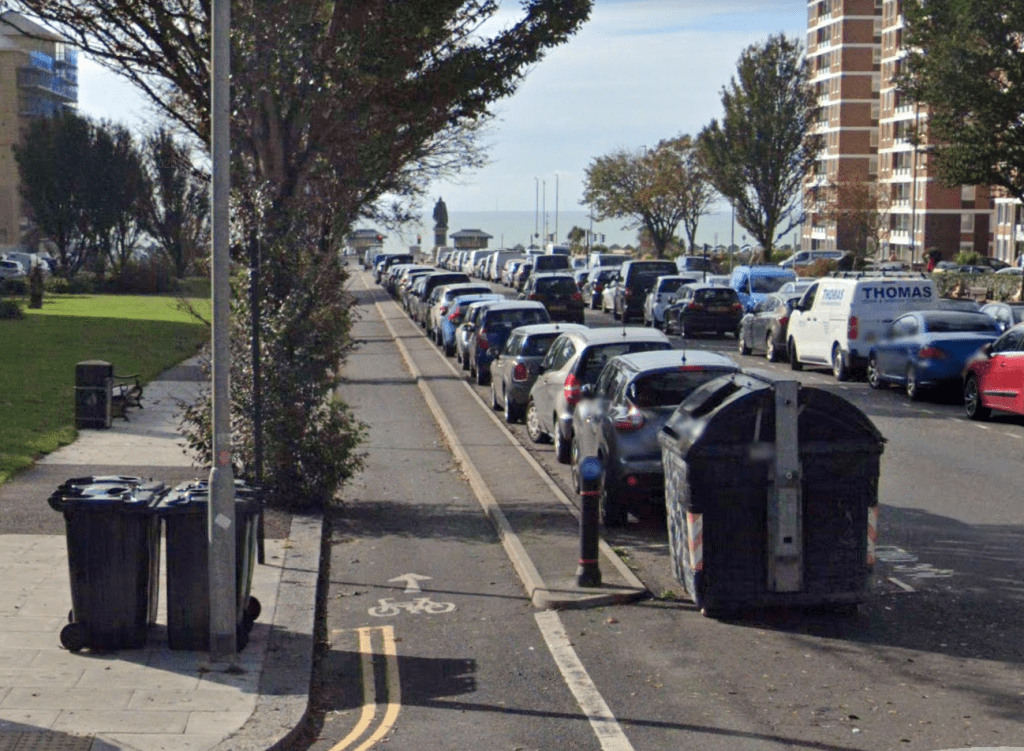
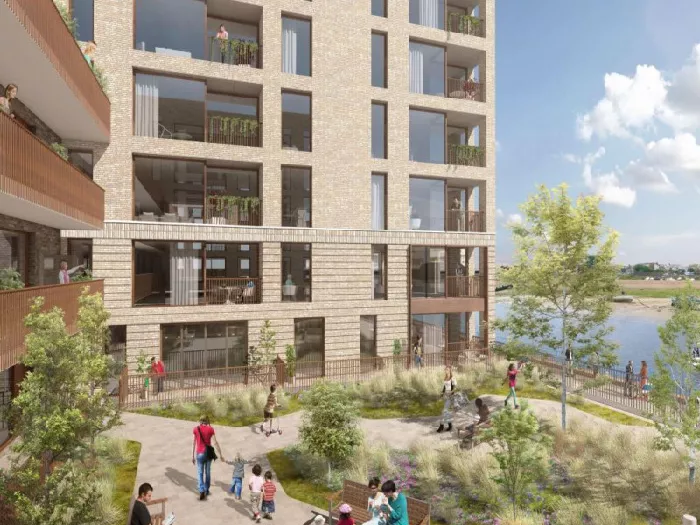
We believe this statement is incorrect, and carries a defeatist view of the future. Evidence from other locations shows that when areas are well-designed, people are much more able to choose sustainable modes of transport like cycling and walking – and they do. The reason planning measures sometimes fail to boost transport choices is that building design is not co-ordinated with street design. There is no use building flats with optimistic cycle storage if the road used by residents is hostile and feels dangerous. We are currently witnessing this failure of co-ordination on the Western Harbour Arm and the A259.
So what are we asking for?
1. A more realistic view of the urgency and failure that we currently face. The people of Adur are demanding better transport choices, and they are not being delivered.
2. More effective collaboration and coordination between Adur District Council and West Sussex County Council, to ensure that aspirations around transport are actually given a chance to succeed, with streets that serve the aspirations of planning.
3. Greater presence for transport in the Adur Local Plan, with its own section (rather than transport being a factor mentioned only in the context of other issues).
The deadline for your input into this stage is on 5 January, so take a few minutes to browse the information and share your thoughts.


 A generous quantity of bike racks show an understanding that many people will arrive by bike.

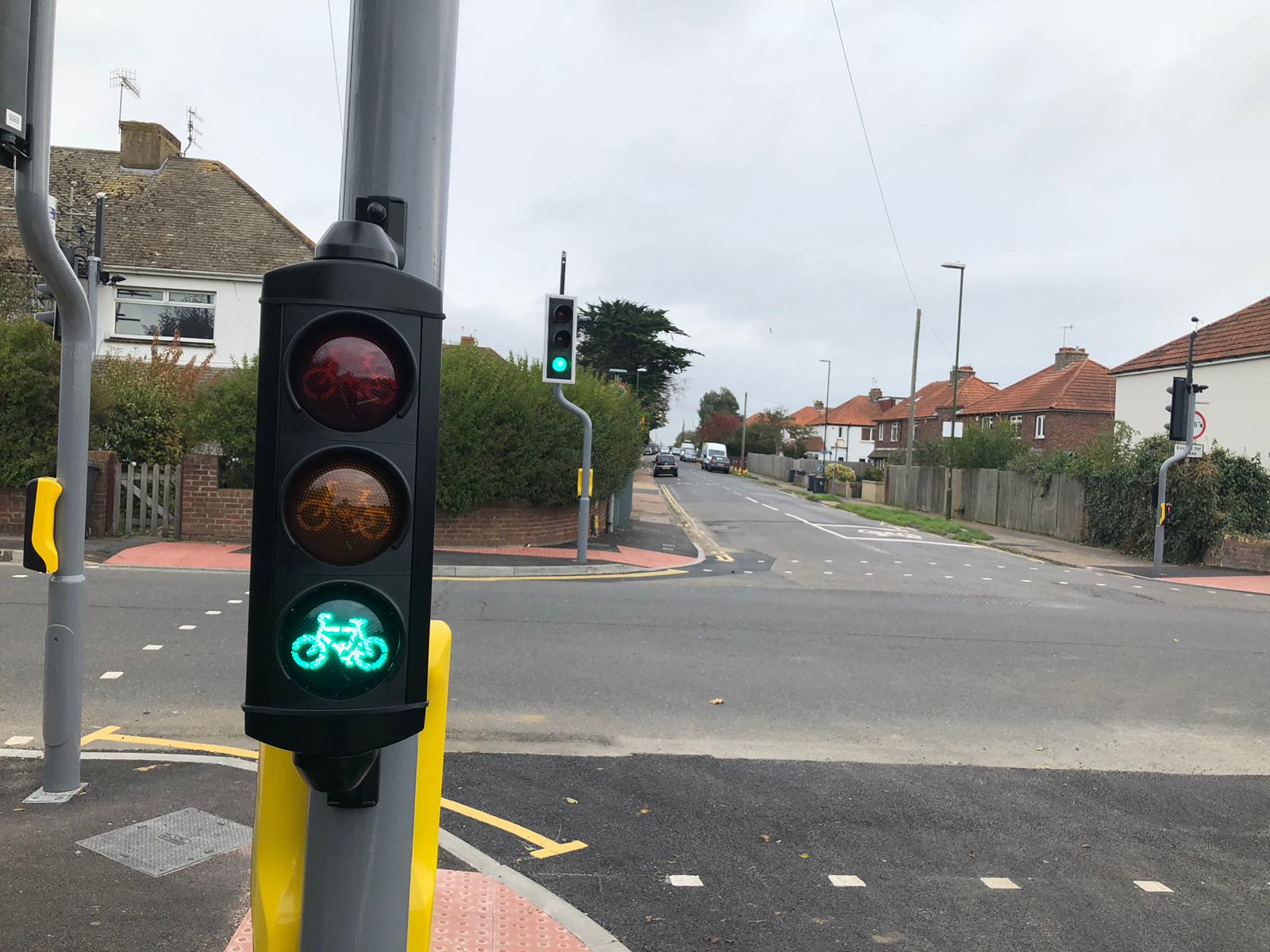 If you’re coming from the east or west, traffic lights now have secondary bike-specific sets at eye level. These lights change to green a few seconds before the main lights, allowing a safety-boosting headstart if you’re on two wheels.
 The eastern end of the allotment track has a brilliant new surface. But a few metres along, the tarmac stops and the original unsurfaced track takes over. A ‘drop kerb’ allows westbound people on bikes to join the existing ‘shared use’ path. This arrangement continues to bring bikes into close proximity with people walking through the area – including young children on their way to school.
 Confusingly, there’s a stencilled ‘bike’ symbol on the tarmac, near the dropped kerb, but its position suggests bikes continue on the rough track – on a surface that is currently only suitable for mountain bikes, not regular cycles. This symbol seems like it should have been placed a few metres sooner if it is intended to guide westbound cyclists.
 SHOREHAM-BY-CYCLE